Building the Future: Incorporating Solar Power into M.E.P. Designs for Nigerian Homes
At Realistic Projects Limited, we believe the future of Nigerian housing must be smart, sustainable, and energy-efficient. As we continue to battle localized energy grids, integrated solar heating envelope structures offer the ultimate roadmap. Learn how our engineers seamlessly fuse sustainable battery arrays directly into modern electrical blueprints.
Nigeria's residential sector stands at a critical intersection of growth and energy transition. With historical municipal grid inconsistencies, forward-thinking homeowners and developers are shifting away from loud, high-emission diesel generators toward silent, self-sustaining alternative energy. However, simply mounting solar panels on top of an existing roof is a suboptimal approach. True energy independence starts at the design stage—specifically, within the Mechanical, Electrical, and Plumbing (M.E.P.) framework of the build.
1. The MEP Paradigm Shift: Beyond Retrofitting
Traditionally, solar energy is treated as an afterthought—an upgrade retrofitted long after the concrete has cured and the walls have been plastered. This often leads to structural compromises, messy external conduit runs, and inefficient system performance due to roof orientations that ignore seasonal solar tracking.
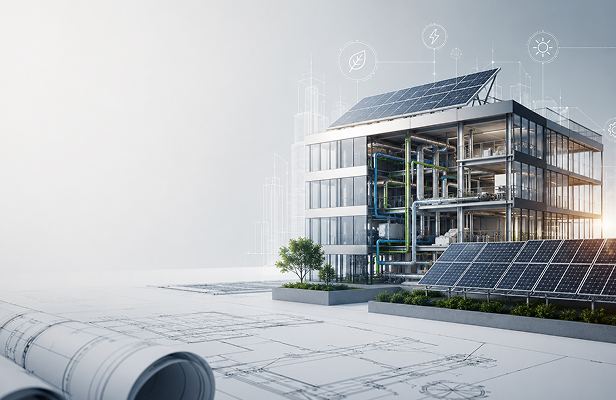
An integrated MEP model treats the sun as a structural parameter. If the roof angle, conduits, and battery thermal vaults are designed in tandem, the overall output efficiency climbs by up to thirty-five percent. — Bldr. Muftau Ibrahim, Project Manager
2. Technical Integration and Load Balancing
Proper load balancing is key to preventing system overload. By separating your electrical circuits during the MEP stage into critical loads (such as low-voltage lighting, smart home systems, refrigeration, and security) and luxury heavy loads (such as central HVAC and pool filtration), we can implement clean, seamless automated power transfer networks. This allows solar batteries to drive essentials continuously while using smart sensors to throttle high-draw machinery only during peak sunlight hours.
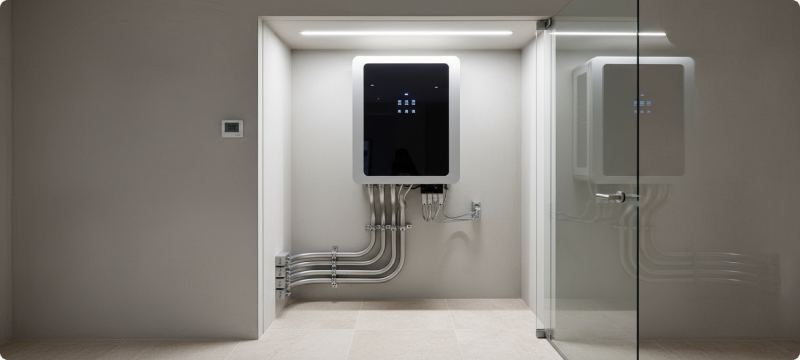
In tropical environments like Lagos, excessive ambient heat can degrade inverter efficiency and trigger premature battery failure. True green construction requires dedicated thermal insulation designs: building subterranean or passively-ventilated vault zones to house sensitive equipment. By introducing direct thermal chimney vents and air barriers, we significantly reduce cooling energy demands and maintain peak component health year-round.
Bldr. Muftau Ibrahim
Project Manager & Lead Designer
Muftau oversees technical integration and sustainable building practices at Realistic Projects. With over a decade of sub-Saharan civil engineering experience, he focuses on high-performance smart structures.
EXPLORE MORE
Related Insights
September 11, 2026Construction
How Professional Material Procurement Reduces Construction Costs for Homeowners in Nigeria
Discover how Realistic Projects helps Nigerian homeowners control construction costs through professional material procurement, quality checks and waste reduction.
An in-depth critique of contemporary urban planning in Lagos and Abuja. We dissect the rapid architectural homogenization and highlight custom engineering pathways to reclaim identity.
From glass curtain walls unsuitable for tropical thermal profiles to superficial smart home gimmicks, we analyze where modern builders compromise true structural resilience.